Weeds are an ever-present issue in the Blue Mountains. There is a history of planting exotic species that are incompatible with the fragile natural ecosystems that nestle against our houses. The Black Summer bushfires, floods and Covid created a ‘perfect storm’ for weeds. Seed beds that were previously thought controlled were revealed by fire and fuelled by intense rain. In the usual course of events, weeds would be noted in their earlier stages and preventative measures put in place. Not so during Covid.
The record-breaking rains and temperatures of 2022 compounded this problem, creating the perfect environment for weeds. Areas that had always been problematic, were now flowering en masse, spreading seed by water, wind, and a plethora of happy birds and grazing animals.
During 2023 the Govetts Leap Catchment Group; a community group focused on protecting the natural environment of Govetts Leap Brook, noted an ongoing issue in bushland areas adjacent to the Blackheath Golf course and approached the club to see what could be done.
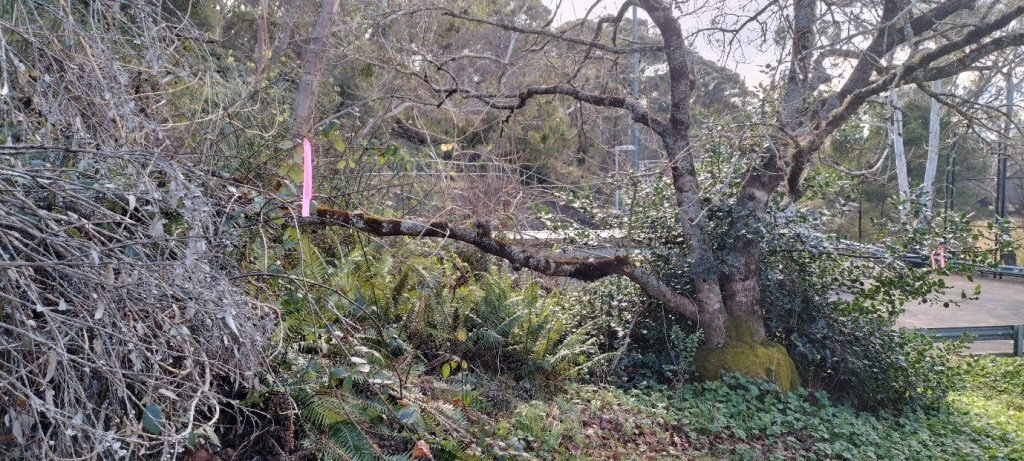
The course is located at the head waters of the Govetts Leap Catchment. Water that flows over the golf course drains directly into Govetts Leap Brook, then flows over Govetts Leap (also known as Bridal Veil Falls) and into the Grose Valley, carrying with it plant material. The ‘roughs’ of the course comprise natural bushland and an array of exotic invaders. By 2023, many invaders, including Gorse, Holly, Himalayan Honeysuckle, Broom, Blackberry, Portuguese Laurel and Spanish Heath, had grown to become trees, all flowering and thriving.

In July 2023 it was agreed that the catchment group would organise a volunteer team of Bushcarers to weed a section of bushland bordering the course. Over the next six months, around 150 hours of weeding were provided by a team of twelve and the results are remarkable. What seemed an intractable problem now has a clear path forward. We believe the club will now be able to keep its weeds in-check, and we will be able to resume our work in the bushland areas surrounding.
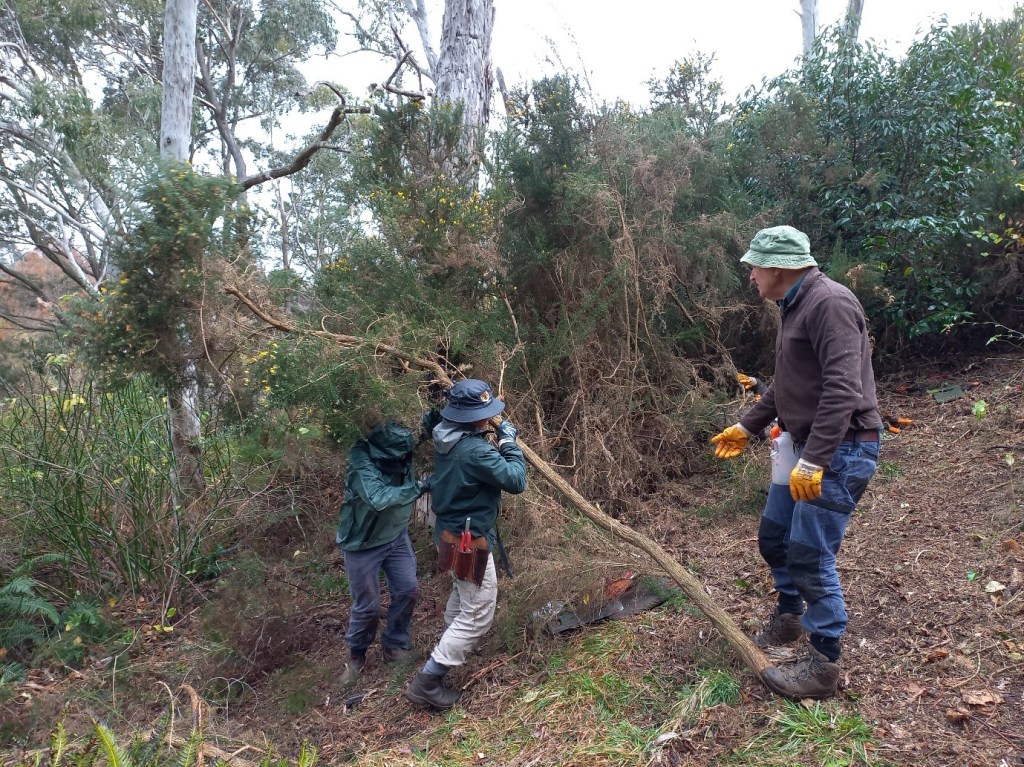
Remember, weeds are everyone’s problem. The best place to start is in your own backyard and the best time to start is now. Small problems can become big ones quickly.
This article appeared online in the Blue Mountains Gazette in December 2023.
 Govetts Leap Catchment Group